MAGGOTS AND MURDER
How Insects Aid Death Investigations with Martin Hall
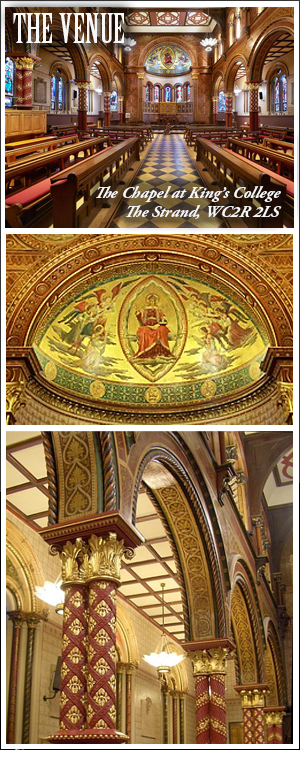
At Kings College Chapel on Sunday 25th October 2026 from 1:30 pm
The crucial evidence at a murder trial can often be provided not by human witnesses, but by insects. Insects are ubiquitous in nature and so are regularly encountered at crime scenes, either as a natural part of the environment or because they have been attracted there by a dead body. This can help the forensic entomologist ascertain how long the victim has been dead by assessing the degree to which insects have colonised the corpse.
Martin Hall will introduce the basics of the science, then take the audience from the crime scene to the laboratory and finally to the court room where the evidence is presented. He will end with a discussion of the wider applications of biomedical entomology beyond the criminal justice system.
Tickets £12.50 including a gin cocktail. Please click here to buy.
MARTIN HALL
Martin attained a BSc from the University of North Wales, Bangor in 1975, and a PhD from Imperial College in 1978. Following several years working on tsetse fly behaviour and control in Africa, Martin joined London’s Natural History Museum as a research entomologist in January 1989 and worked there until his retirement in March 2020. He remains an active Scientific Associate of the Museum and was awarded a DSc from Imperial College in May 2022 for a thesis on published works in the fields of veterinary and forensic entomology, focussing on the association of blow flies and flesh flies with living and dead vertebrate tissues. Martin has used his knowledge of insects on >200 criminal investigations within the British Criminal Justice System. He has authored over 180 peer-reviewed scientific publications, many on the biology of blow flies, the insects of primary importance in forensic entomology. He was the founding President of the European Association for Forensic Entomology. .
|